

 By
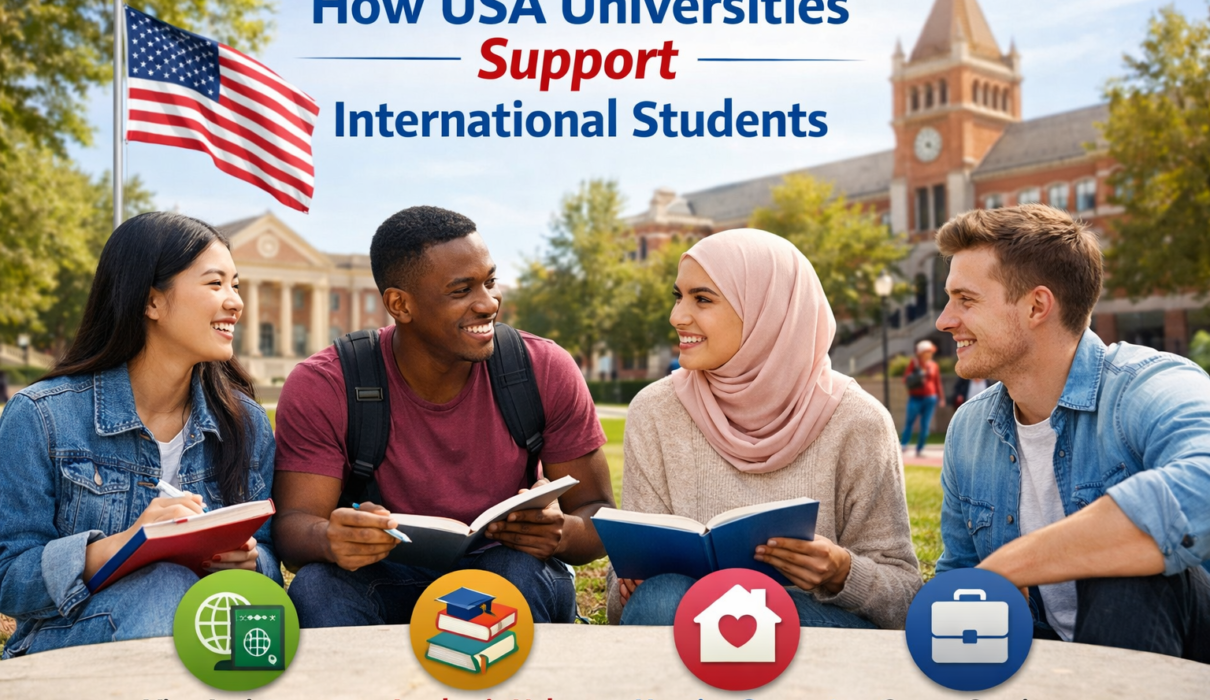
By Studying in the United States is a big dream for many students around the world. It is exciting. It is also a little scary. Moving to a new country means new people, new food, and a new way of learning. But the good news is this: USA universities work very hard to help international students feel safe, welcome, and supported.Learn how USA universities support international students from the first day you apply to the day you graduate, there are many services made just for you. These schools understand that coming from another country is a big step. They know you may need extra help. They plan programs and services to guide you at every stage. Let’s explore how they do this in real life.
A Warm Welcome from Day One
When international students arrive in the USA, they are not left alone. Most universities plan special welcome events.
International Student Orientation
Before classes start, schools hold an orientation program. This program is only for international students.
What Happens at Orientation?
-
Campus tours
-
Help with class registration
-
Meetings with advisors
-
Information about safety
-
Tips about living in the USA
Students learn how to open a bank account. They learn how to use public transport. They learn about health care and school rules. This makes the first week less stressful.
Meeting Other Students
Orientation also helps students make friends. Many schools arrange small group talks and fun games. Students meet others from different countries. This helps them feel they are not alone.
Help with Visa and Immigration
One of the hardest parts of studying abroad is paperwork. Visa rules can feel confusing. USA universities know this.
International Student Office
Almost every university has an International Student Office. This office has trained staff who understand visa rules.
How They Help
-
Explain visa steps
-
Guide students on required forms
-
Help with travel questions
-
Give updates about rule changes
If a student has a visa problem, they can visit this office. The staff listens and gives clear advice. This support builds trust and reduces fear.
Academic Support for Success
Studying in a new country can feel different. Teaching styles may change. Language may be harder. Universities provide strong academic support.
Academic Advisors
Each student usually gets an academic advisor. This person helps plan classes and set goals.
Why Advisors Matter
Advisors check if students are on the right path. They answer questions about majors and graduation. They guide students if they face problems in class.
Writing and Learning Centers
Many international students worry about English writing. Universities offer writing centers.
What Writing Centers Do
-
Help with essays
-
Check grammar
-
Teach simple writing skills
-
Give tips for research
There are also tutoring centers. Students can get help in math, science, and other subjects. This support improves grades and builds confidence.
English Language Support
Even students who speak English may find academic English hard.
English Programs
Some universities offer special English classes. These classes focus on:
-
Speaking clearly
-
Listening skills
-
Academic reading
-
Writing reports
These programs are gentle and supportive. Teachers understand that students are learning step by step.
Learn how USA universities support international students
Language help is not a sign of weakness. It is a smart way to grow.
Emotional and Mental Health Support
Moving to another country can feel lonely. Students may miss home. This is normal.
Counseling Services
Universities offer free or low-cost counseling.
What Counseling Offers
-
Private talks with trained counselors
-
Stress management tips
-
Help with homesickness
-
Support during hard times
These services are private. Students can speak openly. Counselors listen without judgment.
Peer Support Groups
Some schools create groups for international students. In these groups, students share their feelings and stories. This builds connection and trust.
Safe and Comfortable Housing
Finding a safe place to live is very important.
On-Campus Housing
Many international students choose to live on campus.
Benefits of Campus Living
-
Close to classes
-
Safe buildings
-
Easy access to food
-
Meet other students quickly
Residence staff are trained to help students. They answer questions and solve small problems.
Off-Campus Help
If students want to live off campus, universities guide them. They explain rental rules and safety tips. This prevents mistakes and protects students.
Career Guidance and Work Support
Students do not just study. They also plan for their future.
Career Centers
Universities have career centers that support international students.
Services Offered
-
Resume writing help
-
Interview practice
-
Job search tips
-
Career fairs
Staff explain work rules for international students. They guide students about part-time jobs and internships.
Internship Opportunities
Many programs offer hands-on training. This helps students gain real experience. Employers value this experience.Learn how USA universities support international studentsCareer support shows that universities care about life after graduation.
Financial Guidance and Scholarships
Studying in the USA can be costly. Schools understand this.
Scholarship Programs
Some universities offer scholarships just for international students. These awards reduce tuition costs.
Payment Plans
Many schools allow payment plans. Instead of paying all fees at once, students pay in smaller parts. This makes it easier for families.
Financial Advice
Financial offices explain bills clearly. They answer questions about tuition and fees. Clear answers build trust.
Health Services and Insurance
Health is very important.
Campus Health Centers
Most universities have health clinics on campus.
Services Include
-
Basic medical care
-
Vaccinations
-
Health advice
-
Emergency support
International students also learn about health insurance. Staff explain how it works in simple words.
Cultural Programs and Events
Feeling welcome is more than just services. It is about belonging.
Cultural Celebrations
Universities celebrate many cultures.
Examples
-
International food festivals
-
Cultural nights
-
Holiday events from different countries
Students share their culture. Others learn and respect it.
Student Clubs
There are clubs for almost every interest. Some clubs focus on culture. Some focus on hobbies.
Joining a club helps students:
-
Make friends
-
Practice English
-
Feel at home
Campus Safety and Security
Safety is a top priority.
Security Services
Universities provide:
-
24-hour campus police
-
Emergency phone numbers
-
Safety apps
Students learn safety tips during orientation. Clear safety rules help students feel calm.
Transportation Support
Getting around a new city can feel confusing.
Transport Guidance
Universities teach students how to:
-
Use buses
-
Read train maps
-
Buy transport passes
Some schools even provide free or low-cost bus passes.
Support for Families
Some international students come with family.
Family Services
Certain universities offer:
-
Child care support
-
School information for children
-
Family housing options
This shows care beyond just the student.
Building a Strong Community
Support is not only about offices and programs. It is about people.
Friendly Professors
Professors in many USA universities encourage questions. They offer office hours. Students can talk to them after class.
Staff Who Care
Staff in different departments understand the needs of international students. They give clear and honest answers.
This real-world care builds trust. It shows experience. It shows that support is not just a promise.
Real-World Understanding
USA universities have hosted international students for many years. They understand common challenges:
-
Language barriers
-
Culture shock
-
Homesickness
-
Academic pressure
Because of this experience, they design helpful systems. They improve these systems each year. They listen to student feedback.
This ongoing improvement shows responsibility and care.
Clear Communication Builds Trust
Universities share information clearly.
-
Emails explain rules
-
Websites list steps
-
Offices answer questions
When students know what to expect, they feel safe. Trust grows when schools are open and honest.
Graduation and Beyond
Support does not end at graduation.
Alumni Networks
Graduates join alumni groups. These groups help with:
-
Career advice
-
Networking
-
Job leads
International students stay connected. They continue to receive guidance.
Final Thoughts
Studying in the United States can change a life. It brings new skills, new friends, and new dreams. But the journey is not always easy.
USA universities understand this deeply. They build strong support systems. They provide academic help, emotional care, visa guidance, career services, and cultural programs. Each service is designed with real student needs in mind.
With the right support, international students can grow with confidence. They can focus on learning. They can enjoy their new home. And they can build a bright future.
FAQs
1. Do USA universities help with visa problems?
Yes. Most universities have an International Student Office. They guide students with visa questions and paperwork.
2. Can international students get help with English?
Yes. Many schools offer English classes and writing centers to improve language skills.
3. Are there jobs for international students on campus?
Yes. Universities guide students about part-time jobs and work rules.
4. What if a student feels lonely?
Counseling services and student groups are available. Students can talk to counselors or join clubs.
5. Do universities offer scholarships for international students?
Some universities provide scholarships and payment plans to help with costs.